
This is the second in a series of posts by Matt Hudson, Rhino Staging’s Executive Director of Safety, Training, and Rigging. Matt is an ETCP Certified Rigger with thirty-seven years of production rigging experience. He is a Certified Safety Professional specializing in fall protection, a level three Rope Access Supervisor and Evaluator, and is the past President of The Society of Professional Rope Access Technicians.
Training
Training is an important way that we take care of our people and differentiate ourselves from our competitors. Skilled and knowledgeable employees provide a better service to our customers. Employees appreciate gaining skills that increase their expertise and career prospects
Points to Consider
- Well-trained employees are better at the job. They are more productive and do a better job for our customers.
- Training can make people safer. They know the correct way to do things and can look a step ahead to anticipate problems.
- Training is good for employees. Learning and perfecting skills make people more valuable. They may expand the range of calls they are qualified for. They may get paid more.
- Cross-trained employees are more flexible, easier to schedule, and end up getting more work.
- Consistent training for all our employees across markets allows us to have a more seamless experience when we travel people. For example, if all our riggers have the same rescue training and use the same rescue kit, they fit into the program in other markets without any extra planning.
Strategies
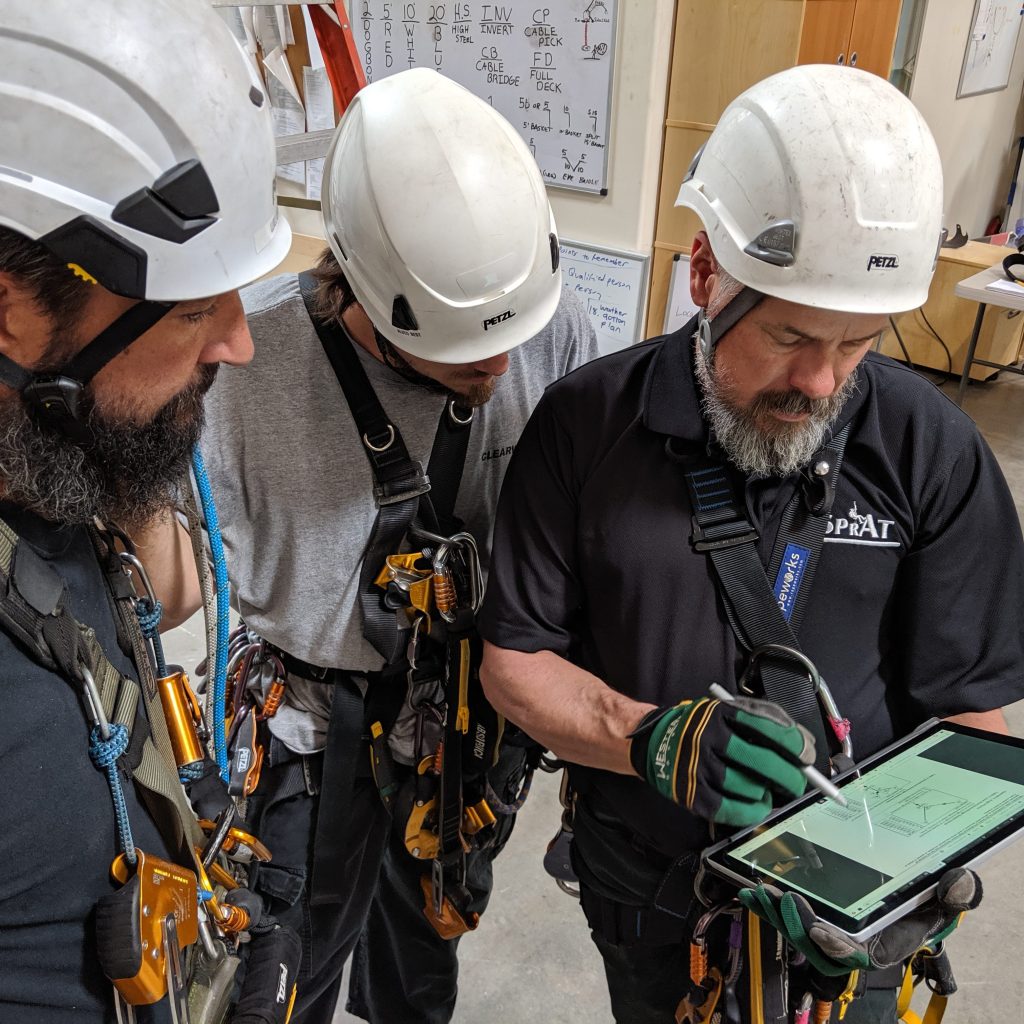
- Training comes in many forms: On-the-job training, mentoring, instructor-lead in-person training, instructor-lead webinars, student-directed online learning. All these forms have their place. We strive to provide a variety of training opportunities to reach students in the most effective way.
- We try to accommodate a variety of learning styles including: visual, auditory, reading & writing, and kinesthetic. This may require different forms of curriculum, settings and teaching materials. We try to make our courses and materials flexible enough to be used in several different ways.
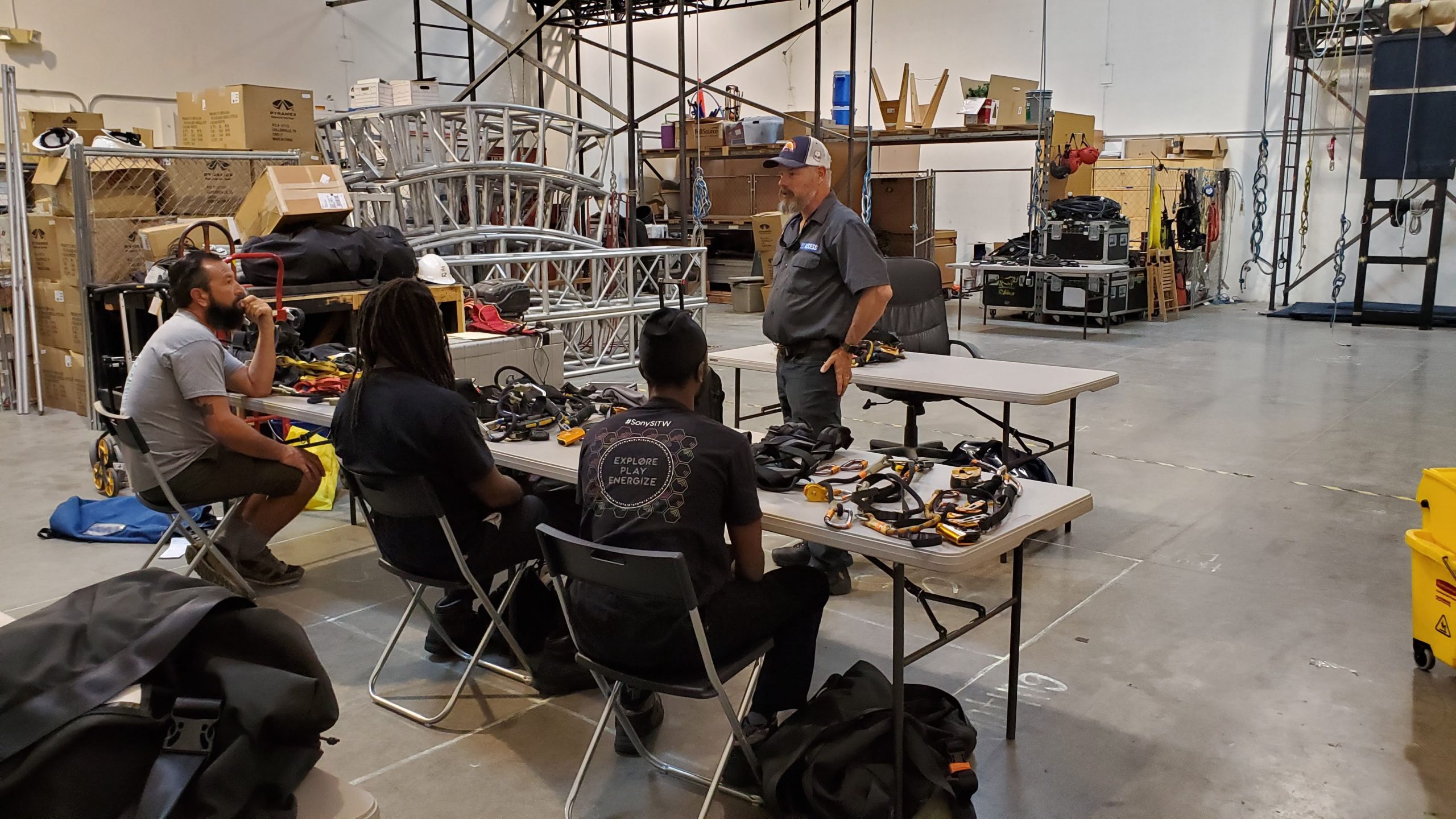
- Some of our courses require us to prove that people have understood the material and are capable of performing the related tasks. These often require a test or a field sign-off. Examples of this type of course include: forklift, aerial lift, spotlight, or fall protection.
- Some courses require apprenticeship style learning to gain competence over time, working with experienced instructors, technicians, and mentors. Examples of this type of course include: master electrician, fly-system operator, or rigger.
- Some courses are more informational in nature and may be instructor-led or available to students online. Students may often decide how much of this training they would like to do and the pace at which they would like to proceed. Examples include basic courses in lighting, audio, video, or carpentry. One strategy we employ is to assign new people basic skills courses. If they successfully complete them, it makes them better at the job and shows their motivation.
- Training may sometimes be used as a reward for good job performance. Show us that you can do a consistently great job as a stagehand and we will choose to train you in a higher skilled, higher paid position.
- We mostly focus our training internally, but sometimes train external people in exchange for access to training spaces or equipment.
The Training Progression
When teaching physical skills we often employ this progression:
- Explain the skill and provide supporting materials such as written handouts or videos.
- Instructors demonstrate the skill.
- Students practice the skill while being guided by instructors.
- To arrive at mastery of a skill, we may have the student teach it to someone else.
Conclusion
It may be frustrating at times to continually train people only to lose them to other opportunities. A way to have some philosophy about this turnover is to think about what would happen if we didn’t train people. Would we really be better off? We should be really good at training our people internally and creating the skilled people to fill our positions. This gives us an advantage over our competitors and is good for our employees.
Read the other installments in this series at the links below.